I paid thousands of dollars for a storytelling course. The framework works. My origin story is the proof.
What I didn't have was consistency. And I was fighting my own self-doubt the whole time.
I'm not lacking the knowledge. AI can build and explain any framework or formula, and I had built my own before I ever paid for a course. Six months ago AI gave me the same strategy and the same direction, and I had already built the tools I need for the direction I need to take: The Leap. What I got from the storytelling course was a push to actually try it before I knocked it. To focus on one thing, stop listening to the noise, and do the work I'm meant to do. These prompts handle the repeat work.
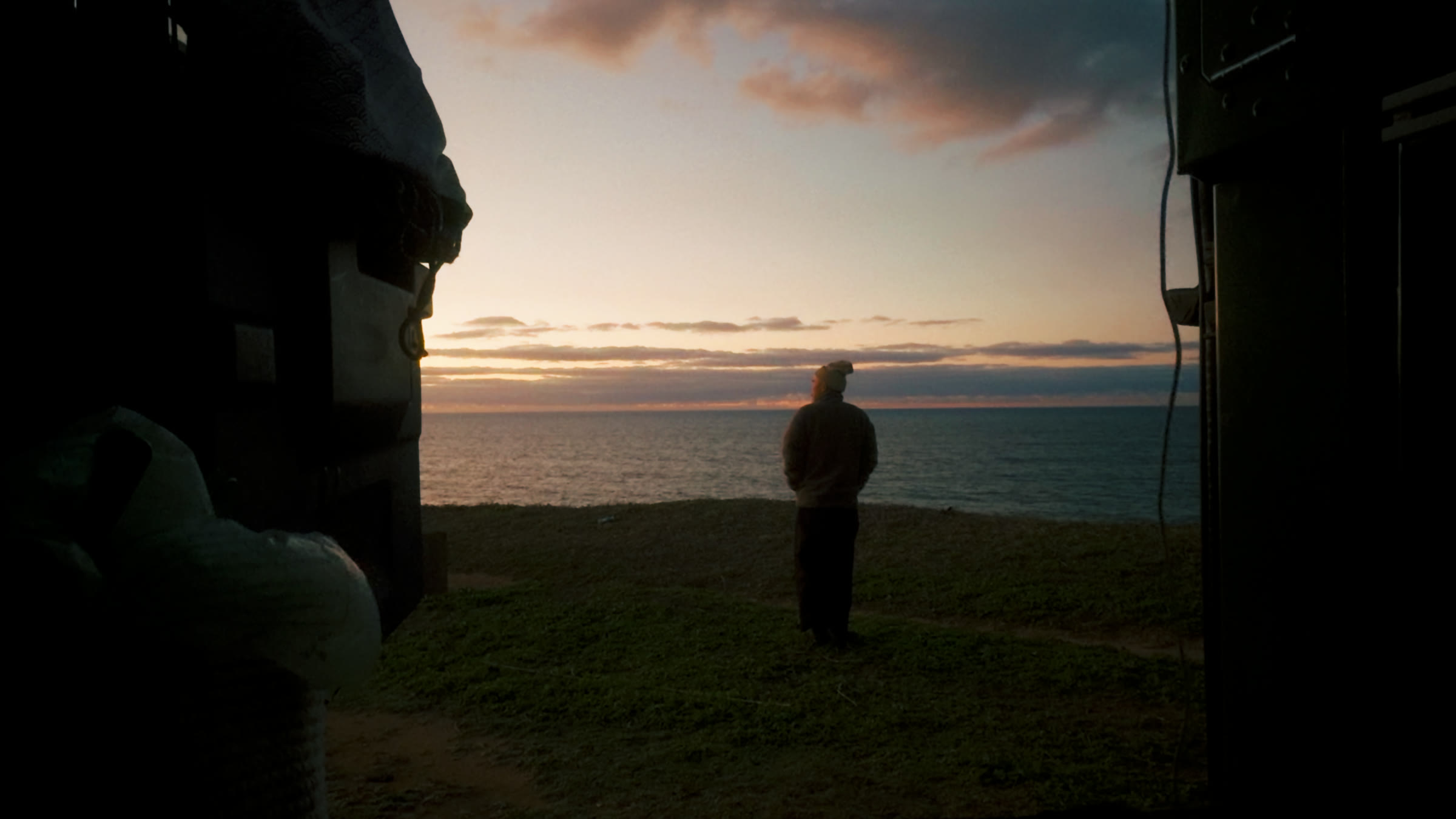
You spent 5 days on a 2-minute reel, 2 weeks on a 5-minute YouTube video. Fewer than a thousand views. Zero engagement.
That's not a talent problem, and your story isn't boring. You made an art piece and sent it into the air, without the structure the algorithm reads.
A voice note, a thought, or footage you already shot.
Scores the idea from evidence: reels in your niche doing 5x+ their creator's usual, and how that shape did on your own account. Every week you get a ranked "film this first" list.
Asks you 5 questions about the idea. You answer by voice memo.
Finds the proven hook and format to follow.
Writes the script in your own words from your answers, and checks it sounds like you.
One line per clip.
Finds the right clips in your footage library, cuts, adds captions, and checks for clipped words, frozen frames and audio problems.
Nothing goes out without it.
Posts at the best time for your audience.
Reads the numbers after 72 hours. The results feed back into the Director.
Every step is triggered by a schedule or the step before it. Nothing depends on remembering.
I never took social media seriously. That's why my community didn't grow as I grew. For two years I fought the part of me that didn't want to give in to the system just to grow a community of people who don't share my values.
Now I understand it a bit better. Social media isn't only for keeping up with friends. It's where I express myself, in words, pictures and video, and where I find the people I want around me.
In the six months before, I posted 47 reels. One passed 2,000 views. Most sat under 1,000.
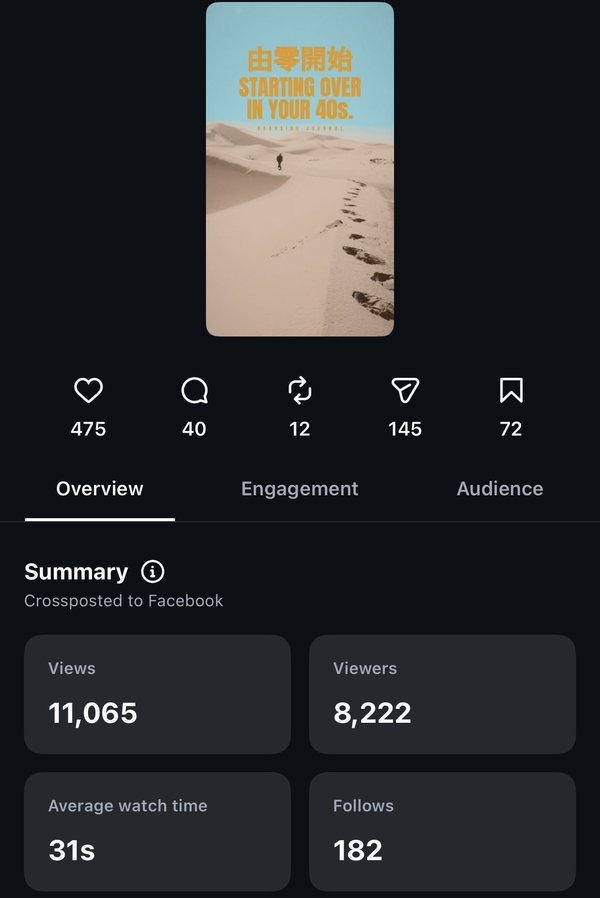
Then these two. The origin story went on my main grid, to the people who already follow me. I made it with the framework from the storytelling course I paid for: 7,992 views and 126 follows in under 48 hours. It's at 11,065 views and 182 follows now. The framework is proven. Follow it and it works.
So I built that same framework into my own engine, over a weekend. I put my effort into the idea and the story I want to tell. The engine helps me find the proven hook and format, and 72 hours after each post it reads the numbers. Then I refine, iteration after iteration, until I get the result.
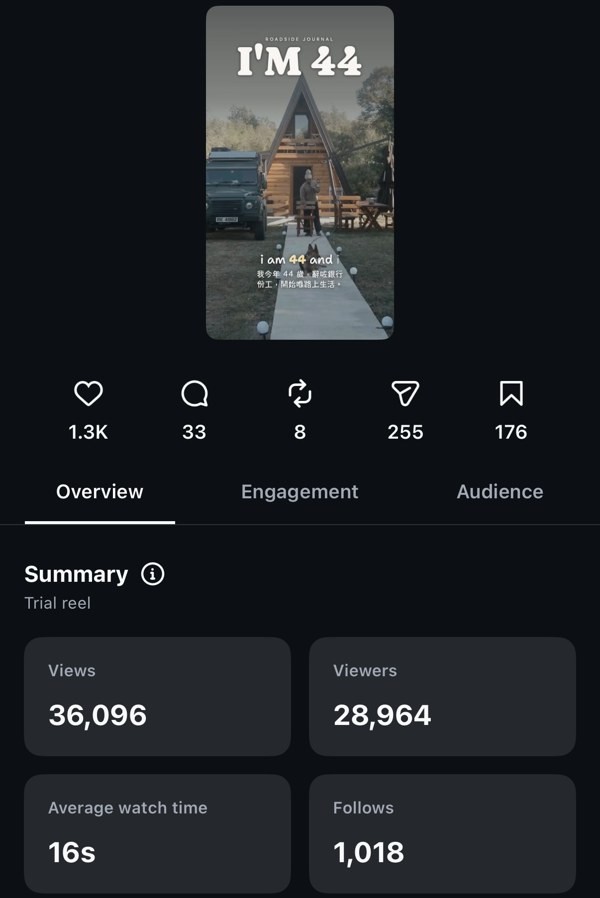
I'm 44 was made that way. It was a trial reel, shown to people who don't follow me: 9,751 views and 188 follows in under 24 hours. It's past 36,000 views and 1,000 follows now.
Different audience, different job. That doesn't make my engine better than the course. It runs on the course's framework. I'm 44 proved again that I had the skill, the ideas and the stories. All the ingredients were there.
It wasn't just a content system I was lacking. I needed structure, a way of working that fits around how I live on the road, adapts with me and holds me accountable. Instead I winged it the whole time and did things by feel. Whenever I had a new creative idea, I drifted off to it. I never stuck to the plan. Nothing got finished.
I believe we are all the main character of our own story ▶. I always knew I had one. I have the skills, an eye for detail, and I know what's beautiful to watch and what's shit. Nobody critiques my work harder than I do. No one can hurt my feelings. I already beat myself down, over and over. I still fear being judged. I post anyway, because I would rather do what I want than spend my time worrying about it. When I signed up for the storytelling course, it didn't take long to see that more knowledge wasn't the answer. I needed a system that gets me doing the work, every week.
A lot of courses sell you a framework that isn't what made them successful. They're selling you the 'idea' that it will work for you too. The course I paid for isn't one of those. Its framework actually works. What held me back was me. So I built a system that works with me, not against me, and I would suggest you do the same.
No one knows your story better than you. AI doesn't change that.
You still have to do the work.
You still have to create.
You still have to tell your story.
I talk to AI about everything. It's my journal. It still never writes me a perfect script, not even in 50 tries. That's the point. Don't let AI make up your story. Give it your words and ask it to restructure and challenge them.
Going viral isn't my goal. I want my videos to find the people who share similar interests, values and passions, even if they see life differently. People who haven't given up on what they dream of. People who dare to go after what matters to them, without asking anyone's permission.
These prompts are tools. They won't make you go viral, or turn you into an influencer. Without your story, all they build is AI slop. You still need to understand what it takes to survive in a system built to trap us. What they do is take the guesswork off you, so you stop wondering why the algorithm treats your video like leftovers and your competitor's like its favourite snack, and get back to making things.
The first prompt is your story. Start there. They're the basic skeleton, not the finished thing. Copy them, change what doesn't fit, and keep talking to your AI to make them better. I hope this helps.
This changes every few weeks. New tools keep showing up that do the same job faster. This is what I use right now, October 2026. The tools are already here. If you want to tell your story, all that's left is to start.
Finds reels in your niche doing far more than their creator's usual. This does the research. Needs a vidIQ account; some features are paid. Claude Code walks you through connecting it.
Posts your reels and reads each one's numbers after 72 hours.
Turns your footage and voice notes into text.
Cuts the video and adds the captions.
Worth exploring. These aren't part of my process. They came up in research as worth a look. Try them on something small before you pay for anything.
Turns HTML and CSS animation into MP4, built for coding agents. An alternative to Remotion for captions and motion graphics. It installs as a Claude Code plugin. It's young: open source since around March 2026.
Its Instagram Reel Scraper pulls a creator's public reels with their numbers and transcripts, so you can study specific accounts. After the free credit it's about $2.30-2.60 per 1,000 reels. Automated collection is a grey zone under Instagram's terms.
Ranks each creator's posts against that creator's own usual across IG, TikTok, YouTube, X, LinkedIn, Threads and Substack, and breaks down the hooks. The free tier is only a preview, and outliers need a paid plan. There are no independent reviews yet.
Downloads video, audio and subtitles from YouTube, Instagram and TikTok, so Claude can study a reel frame by frame or read its transcript. There's no MCP; Claude Code runs it directly. It sits in the same grey zone under Instagram's terms as Apify.
Try the prompts and play with them. Follow along for the ride, and for more tips as I share what I learn.
Feeling lost? Try The Leap. It's free, there's no catch. It takes about two hours, and I swear you'll walk out with more clarity on what to do next than when you started.
Start with The Leap (free) →Interview me so you know my story before you write anything for me. Ask one question at a time and wait for my answer. Don't suggest answers for me. If I answer by voice, read back every name, place, date and number before you save it. Dictation mishears them. 1. The facts: my age, where I grew up, what I did for work and for how long, what I left or changed, what I do now and where. 2. Turning points: 3 to 5 moments that changed my direction. For each one ask where I was, what happened and what I did next. Push for details: the date, the place, what was said. 3. Still open: what I haven't figured out yet. 4. My audience: who I want to reach, what they're stuck on, and what I know about it that they don't. 5. My lines: ask me to paste 10 things I've actually said or written (notes, captions, voice note transcripts). Not polished. Then write story.md: the facts, the turning points in my own words, what's still open, and my audience. Mark anything you guessed instead of heard from me. Keep it under two pages. Read story.md before every script you write for me, and add to it when I tell you something new. When I correct a fact about me, fix it in story.md straight away, so I never have to correct it twice.
Set up a content engine for my Instagram, in Claude Code. Build these files with me, asking me questions where you need my input: 0. Read story.md. If it doesn't exist yet, run the story interview first. 1. voice.md: interview me, then capture how I talk: 10 real lines of mine, words I use and never use, and 3 examples of 'this is me / this isn't'. 2. Agents (one short instruction file each): - a researcher that uses the vidIQ connector to find reels in my niche doing 5x their creator's usual (if vidIQ isn't connected, tell me how to connect it) - a director that scores every idea out of 10 from real evidence (outliers at 5x+ in my niche, and how that shape did on my own account) and tells me what to film first, and which ideas aren't worth filming - an interviewer that asks me 5 questions about an idea before anything gets written, so the script is built from my own words - a story editor that finds the one moment in my material that fits a proven pattern, then writes a 5-6 line story spine for my yes before any line gets picked - a writer that scripts it in my voice (hook in the first line, under 60s, every line in my words, invented lines flagged) - a checker that rejects anything that doesn't sound like me, and checks every name and fact against something I typed, not a voice transcript 3. formats.md: proven formats with real examples, and a results table that gets a new row for every post I make, including the one thing that post changed. 4. queue.md: every reel's job, status, slot, and my approval in my own words. This is the one status board. Update it from the Instagram API, never from memory or a task log. 5. Schedules: a weekly run (read my last numbers, research, write one new script for me to film) and a 72-hour check after each post that writes the results into formats.md. Set them up with whatever scheduler my computer has. My numbers come from the Instagram API if it's set up; otherwise ask me to paste them. Give each scheduled run the permissions it needs up front. A run that stops to ask for permission stalls without telling anyone. After every scheduled post, read the account through the API to confirm it's live. Rules: nothing gets posted without my yes. My yes comes before a post is scheduled, so the run itself never waits on me. Never copy another creator's words, only their patterns. Test each piece before moving on. Every agent must be triggered by a schedule or a step in the workflow. If I have to remember to run it, it won't run. When I correct an output, write the correction into that agent's instruction file, so I never have to say it twice.
You're my short-form story editor. Read my story.md first. 0. Before writing, ask me 5 questions about this idea. Wait for my answers. 1. What's working: use the vidIQ connector to find 3-5 reels in my niche [your niche] that got far more views than their creator's usual. If vidIQ isn't connected, tell me how to connect it. For each, tell me the hook (first 3 seconds), the format, the length and how it ends. Only call it a pattern if 2 or more show it. 2. My material: [paste a voice note transcript, journal entry, or what happened]. 3. Pick the story: find the one moment in my material that fits a pattern from step 1. Use the pattern, never another creator's words. Then write the spine in 5-6 lines: once, every day, until one day, because of that, until finally. Show me the spine and wait for my yes before you write any lines. My best lines in a row are not a story. They need context. 4. Write it: hook said in the first line and on screen from second 0. Under 60 seconds, 6-9 short lines, every line in my own words from my material, following the spine. Flag any line you made up. Check every name, place and number against something I typed, not a voice transcript. If a line is in my second language, write it the way a native speaker would say it, never a literal translation. End on something concrete: a fact, a decision, a question. Not a lesson. 5. Two openings: give me 2 versions of the first line, with everything else identical, so the opening is the only thing being tested. Post both as Trial Reels and keep the one that wins after 72 hours. 6. Filming: one line per clip, a beat of silence before and after. List the B-roll to grab. 7. Caption: hook first, then one short paragraph that tells the story in my own words. Not point form. End with a share line that names a specific person and a reason, like 'send this to a friend who has been asking the same question for years'. No 'follow for more'. No motivational lines. 8. Lock sheet: put it all on one screen for one approval before anything gets rendered: the spine, the exact on-screen lines, the text style and pace (with 1-2 reference reels), the reason someone would send, save or follow, and the one thing this post tests. Every decision made after a render costs another render.
Build me a reel pipeline on my computer with Claude Code, one step at a time, testing each on 3 of my clips: 0. Lock first: only render from an approved lock sheet (spine, on-screen lines, text style, the one thing being tested). If there isn't one, or a decision isn't on it, ask me before the render, not after. 1. Index: scan my footage folder and transcribe every clip with Whisper, keeping word timings. Save a searchable list: clip, date, camera, what was said. 2. Search: find clips by what I said, plus silent footage shot around the same time. 3. Rough cut: from a list of picks (clip plus start and end seconds), cut a vertical video with ffmpeg. Remove long pauses, keep breaths, cut on quiet moments, never mid-word. 4. Captions: word-by-word captions with Remotion, in my font and colours. Keep all on-screen text clear of my face, and big enough to read on a phone at a glance. 5. Finish and check: add a title card and fix the loudness to about -14 LUFS, with my voice in both ears. Flag frozen frames and words clipped at a cut, by re-transcribing the result and comparing it to the script and the captions, to catch wrong caption words. 6. Post: through the Instagram API with my own Meta app (walk me through creating it; my account needs to be Business or Creator). Dry run by default; publish only when I approve. After it posts, read the account through the API to confirm it's live. Don't trust the log. Read each reel's numbers after 72 hours. Music: the API's music library is smaller than the app's, and posting with music needs a Facebook Page linked to my Instagram account (the Facebook Login route). If the song I want isn't available, tell me and I'll post that one from the app. Write a README so I can run it again.